TVA is pressing 240,000 solar panels onto 270 acres of Kentucky coal ash, and the thin synthetic turf layer that seals the poisoned ground is why the site can finally face the sun
Somethingunusual sits underfootat every panel in this Kentucky field. It is not soil. It is not gravel. It carries arsenic, lead, and mercury, locked in a gray material that utilities once pumped into open ponds. . .
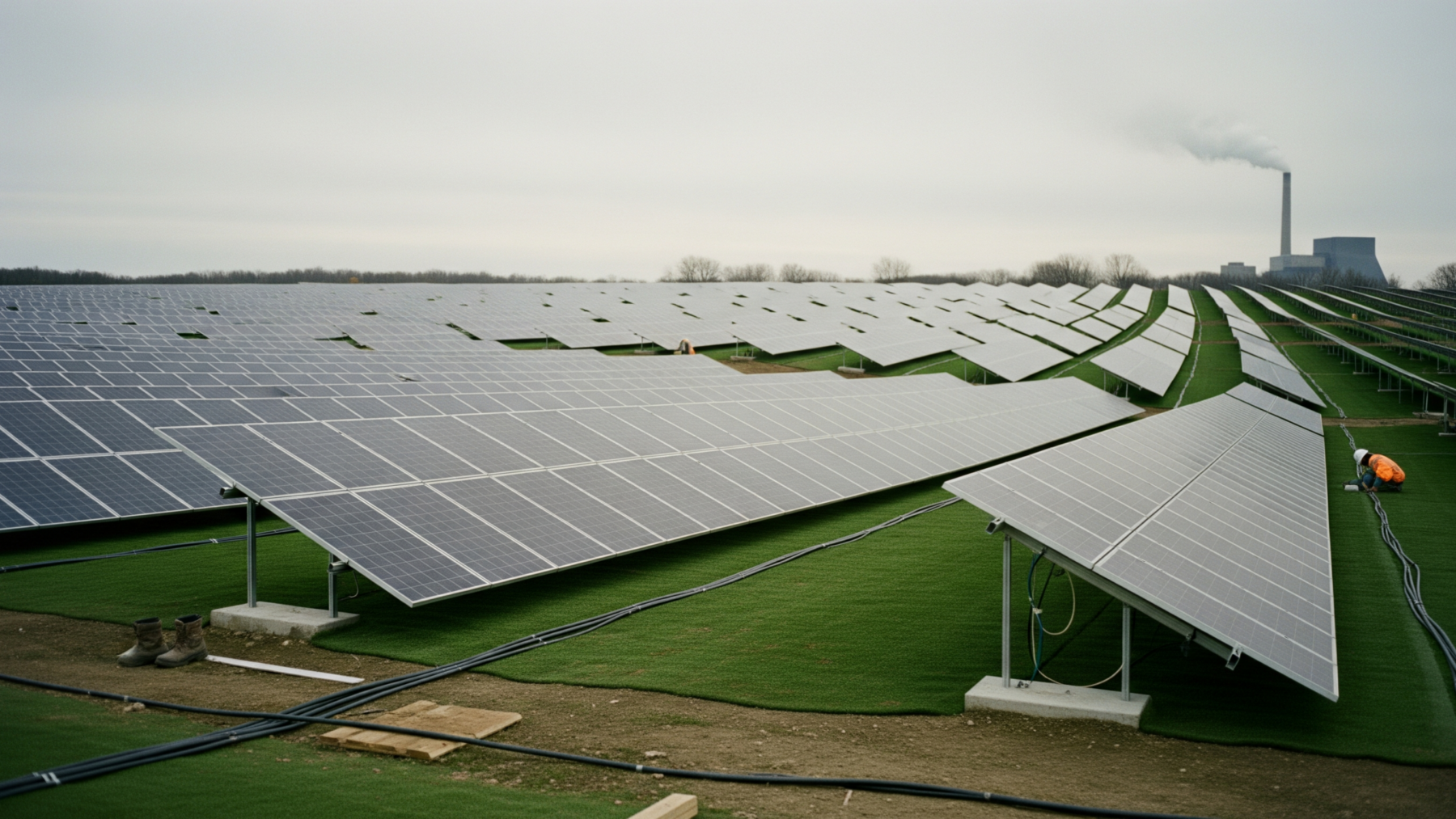
Somethingunusual sits underfootat every panel in this Kentucky field. It is not soil. It is not gravel. It carries arsenic, lead, and mercury, locked in a gray material that utilities once pumped into open ponds with little thought for what might leak beneath them. It is decades of compacted coal combustion waste, shaped into gentle hills, capped with a synthetic green turf, and now holding the weight of the largest solar array ever attempted on poisoned ground. The field is in McCracken County, northwest of Paducah, and the story of how it got here starts not with an engineer but with a catastrophe a long way away. In 2008,more than a billion gallonsof coal ash slurry burst from a failed pond at TVA’s Kingston Fossil Plant in eastern Tennessee, flooding nearby rivers in one of the worst industrial environmental disasters in American history. A legacy that poisoned the ground beneath the plantCoal ash is what remains after coal burns in a power station furnace. It carries arsenic, lead, and mercury, locked in a gray material that utilities once pumped into open ponds with little thought for what might leak beneath them. After the Kingston disaster, the EPA created new regulations guiding how fossil fuel plants must dispose of waste. TVA began storing coal ash that could not be recycled by drying it and compacting it into the ground. TVA is now closing a 309-acre coal ash site at the Shawnee Fossil Plant using a patented cap system called ClosureTurf. The cap holds the ash down and keeps contamination from moving, but for years the land had no other purpose. It was just a sealed,toxic landscapethat nobody wanted to use. Why no one could simply build on top of this siteDriving a standard solar panel mounting post through a coal ash landfill cap is not straightforward. Pierce the liner and the sealed waste beneath can start moving toward groundwater again. The synthetic turf layer acts as both a containment membrane and astructural platform. Cleats lock hardware into the turf without penetrating the impermeable cap, so engineers can anchor panels without driving piles into the sealed waste. Crews shaped stored coal ash into gentle hills contoured to optimize both drainage and solar generation. On a sculpted surface, panels sit closer together without losing sunlight to a neighbor’s shadow. The result is a density that most flat solar farms simplycannot match. A number that makes engineers stop and stareUtility scale solar typically asks for a lot of land. A standard project generating 100 megawatts needs roughly a thousand acres to spread across. Project Phoenix will use only 270 acres to generate that same 100 megawatts, making it nearly four times more efficient than a conventional site. That efficiency matters enormously in a region whereevery extra acreof solar on farmland triggers local opposition and real economic loss for working families. The coal ash field was unused land, and Project Phoenix makes it useful without displacing farms the way similar private facilities do elsewhere in Kentucky. The panels connect to existing plant grid infrastructure nearby, so power reaches the grid at minimal additional cost. That is ahidden financial bonusthat standard greenfield solar rarely enjoys. What 240,000 panels rising from coal ash actually becomeThe project has a name the site’s own plant manager used without hesitation:Project Phoenix. Once completed, it will feature 240,000 solar panels generating 100 megawatts onTVA propertywest of the Shawnee Fossil Plant. TVA described it as the world’s first large scale solar installation of its kind on a closed coal ash site. Nearly 30,000 of the 240,000 panels are already in place, and the project is expected to enter service in 2028. The ClosureTurf layer beneath each panel also leaves a future option open: TVA could potentially harvest some coal ash for use in concrete and roofing materials. That would mean thewaste itselfeventually earns value rather than simply being contained. See howAmerican farmersfound a different model, and howa Texas rancherkept productive land working beneath solar panels. What a turf layer means for thousands of poisoned sites across AmericaHundreds of coal ash sites are set to close over the next decade and could become low impact locations for utility scale solar farms. If Project Phoenix proves that contaminated ground can besealed, graded, and energizedat nearly four times the density of a conventional field, the template becomes replicable across dozens of states. Utilities from across the country have already been visiting McCracken County to see whether the approach can work at other closed ash sites. Every coal ash site has a different contaminant profile, different liner integrity, and different groundwater risk, so site specific engineering will always be required. But on a morning in western Kentucky when the first panels catch the light, the image is hard to argue with: a field of blue glass drawing electricity from the sky, rooted in thelast thinganyone expected to hold the sun. Author ProfileHugo RojasEditorHugo is an engineer with strong technical expertise and deep knowledge of the space industry. Multilingual from an early age, his writing combines technical clarity with a strong interest in science and energy. Hugo RojasHugo is an engineer with strong technical expertise and deep knowledge of the space industry. Multilingual from an early age, his writing combines technical clarity with a strong interest in science and energy.