Tokenised markets and crypto brokers reshape trading debate
The race to shape the next phase of financial markets came into focus on the closing day in Limassol, as industry executives turned their attention to tokenised assets, crypto platforms, traditional brokers and the infrastructure needed to support a more digital trading environment. The discussion began with the session ‘The Tokenisation Revolution: Who Will Own…
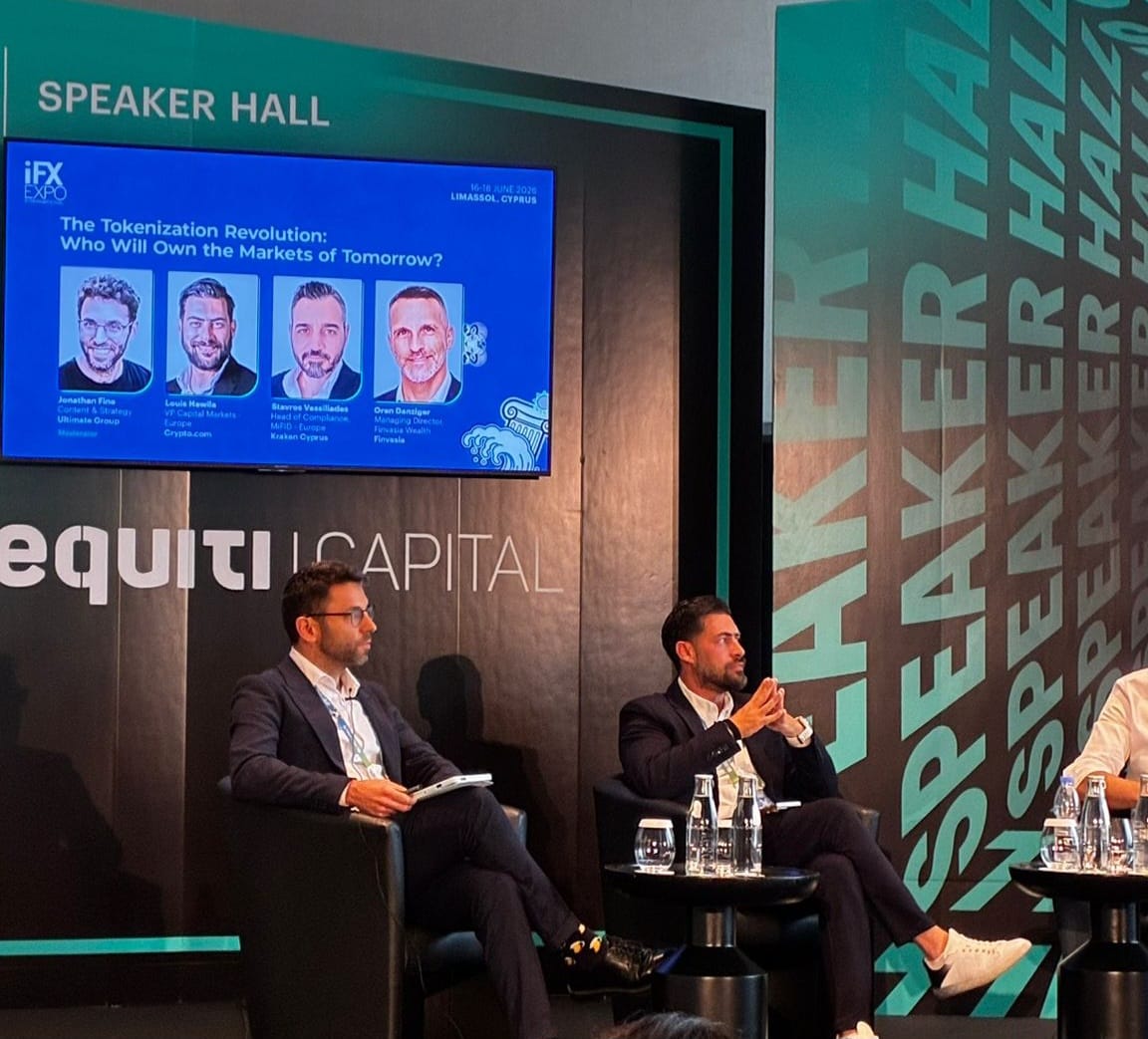
The race to shape the next phase of financial markets came into focus on the closing day in Limassol, as industry executives turned their attention totokenised assets, crypto platforms, traditional brokers and the infrastructure needed to support a more digital trading environment. The discussion began with the session‘The Tokenisation Revolution: Who Will Own the Markets of Tomorrow?’, which brought togetherJonathan Fine of Ultimate Group, Louis Hawila, VP Capital Markets – Europe at Crypto. com, Stavros Vassiliades, COO and Executive Director at Kraken Cyprus, and Oren Danziger, Managing Director at Finvasia Wealth. At the centre of the debate was the evolving landscape oftokenised assetsand the question of which market participants are best positioned to shape future financial infrastructure. Panellists looked at whethertraditional financial institutions, with their scale, client relationships and regulatory experience, are more likely to lead the transition towards tokenised markets, or whetherblockchain-native platforms, which have moved faster in developing digital asset products and infrastructure, will take the lead. However, the discussion also made clear that the shift is unlikely to be immediate. Issues such asinteroperability, liquidity and infrastructure readinessremain central to whether tokenisation can move beyond pilot projects and specialist use cases into wider market activity. Regulation was also part of the debate, particularly the potential impact of frameworks such as theMarkets in Crypto-Assets regulation, as firms assess how clearer rules could affect adoption, competition and investor confidence. The session also considered the longer-term outlook for tokenisation, including whether it could reshape capital markets within the next five years or whether the industry is still facing a longer period of gradual transition. That question fed into a wider discussion on how the boundaries betweendigital assets and traditional financeare becoming increasingly difficult to separate. The panel‘Blurred Lines: When Crypto Platforms Trade Wall Street’brought togetherBadea Alexandru Gabriel, Senior Regional Director at Naga, Lior Aizik, Co-Founder and COO of XBO. com, Andrew Theodosiou, Sales Director EMEA at Talos, Dr Demetrios Zamboglou, Group CEO of BitDelta Group, and Steven J. Hatzakis, Global Director of Research at ForexBrokers. com. This discussion focused on the convergence betweencrypto-native platforms and traditional financial services, as both move into overlapping asset classes and trading models. Panellists examined how crypto firms are expanding intoequities and commodities, while traditional brokers are integrating digital assets and upgrading their infrastructure to remain competitive. A key theme was the growing demand for24/7 multi-asset trading, with clients increasingly expecting broader product access, faster execution and more flexible platforms. Regulation was again presented as a major factor in shaping competitiveness, as companies try to balance innovation with compliance, consumer protection and infrastructure reliability.