New ultrasonic sensor introduces certified 3D safety layer for robots
ADAR One adds a certified 3D safety layer that verifies space around robots independent of AI or cameras. SonairNorwegian robotics company Sonair has unveiled ADAR One, which it says is the world’s first. . .
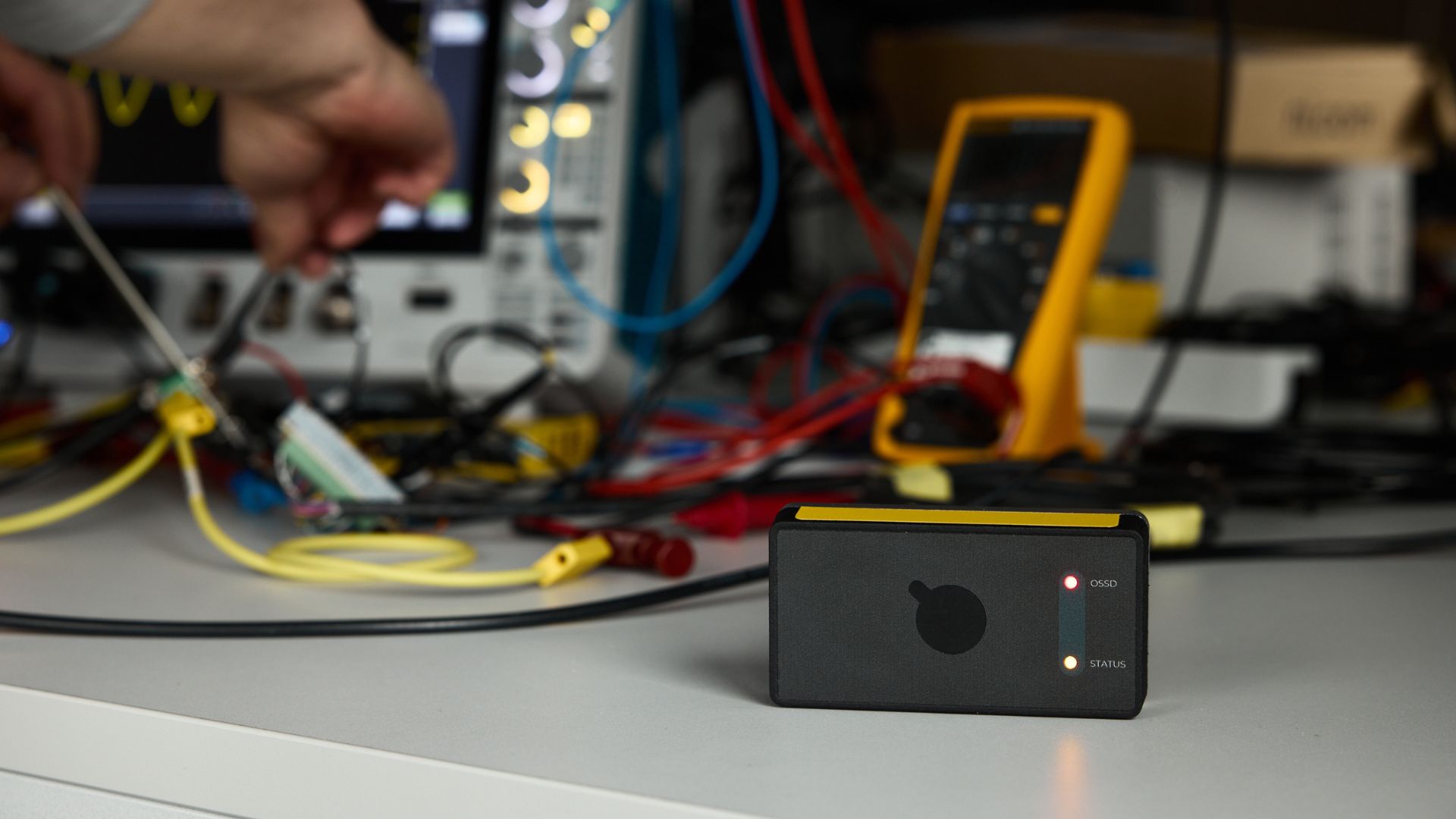
ADAR One adds a certified 3D safety layer that verifies space around robots independent of AI or cameras. SonairNorwegian robotics company Sonair has unveiled ADAR One, which it says is the world’s first safety-certified 3D ultrasonic sensor for human-robot collaboration. Designed for autonomous mobile robots, humanoids, and industrial automation systems, the sensor provides 180°×180° three-dimensional spatial awareness, enabling robots to detect people and obstacles at all heights. According to Sonair, unlike conventional 2D safety sensors, ADAR One eliminates blind spots while adding an independent safety layer beneath cameras, AI software, and motion-control systems to verify that the surrounding environment is safe. Recently, European scientistsdevelopeda color-changing tactile sensor that lets robots see touch in real time by converting mechanical forces into dynamic color patterns. Smarter robot safetyAs robots become more capable through AI, safety systems have lagged. The biggest challenge is reliable human detection, not intelligence. ADAR One’s certification aims to provide sound-based 3D sensing that can safely complement cameras by detecting nearby people under a wider range of conditions. Designed for autonomous mobile robots, humanoids, and industrial automation systems, ADAR One provides 180°×180° three-dimensional spatial awareness, enabling robots to detect people and obstacles at all heights. By using acoustic detection and ranging (ADAR) technology, the sensor overcomes the blind spots and height limitations of conventional 2D safety systems. Its compact design allows it to be integrated into a wide range of robotic platforms with minimal space requirements. According to Sonair, ADAR One is more than a replacement for existing sensors. The technology introduces a certified 3D safety layer that operates independently of cameras, AI software, or motion-control systems, continuously verifying that the area around a robot is safe before and during operation. The sensor has already entered series production and is being deployed on industrial robots. Since the beta version was introduced a year ago, more than 80 robotics companies worldwide have evaluated the technology through Sonair’s testing program. Following its safety certification, several companies are preparing commercial deployments. Robot perception certifiedSonairclaims that ADAR One has been tested and certified to meet some of the world’s toughest industrial safety standards for detecting people and obstacles around robots. The certification confirms that the sensor can reliably help protect workers in factories, warehouses, and other automated workplaces. It has also been approved under European machinery safety regulations, making it suitable for use in commercial industrial robots. Sonair says ADAR One is the first safety-certified embedded system built using the Rust programming language, which is designed to improve software safety and reliability. For robot manufacturers, the certification offers an alternative to traditional 2D laser scanners that are widely used for safety. Because ADAR One provides full 3D awareness, companies can build robots that better detect people and objects while reducing system complexity and cost. System integrators can install the compactsensorin autonomous mobilerobots, automated guided vehicles, and collaborative robots without major design changes. Humanoid robot developers can also embed the small sensor directly into a robot’s body to provide an additional certified safety layer alongside cameras and AI. “This is precisely the role ADAR One is designed to play as a drop-in, pre-certified safety layer. What used to be an engineering burden is now transformed into a commercial differentiator for all stakeholders,” said Knut Sandven, CEO of Sonair, in astatement. According to Sonair, for businesses operating robots, such as warehouses and logistics companies, the technology promises safer workplaces, fewer accidents, improved productivity, and greater confidence that robots can work alongside people while meeting recognized safety requirements. Get the latest in engineering, tech, space & science - delivered daily to your inbox. Jijo is an automotive and business journalist based in India. Armed with a BA in History (Honors) from St. Stephen's College, Delhi University, and a PG diploma in Journalism from the Indian Institute of Mass Communication, Delhi, he has worked for news agencies, national newspapers, and automotive magazines. In his spare time, he likes to go off-roading, engage in political discourse, travel, and teach languages.