In just 190 seconds, Grayscale quietly pulled the plug on three major altcoin ETFs
Cardano, Hedera and Polkadot registration withdrawals gave no reason for the retreat, while five other Grayscale altcoin filings remained preliminary. Editor-in-ChiefCryptoSlateAug. 10, 2026at 12:20 am GMT2. . .
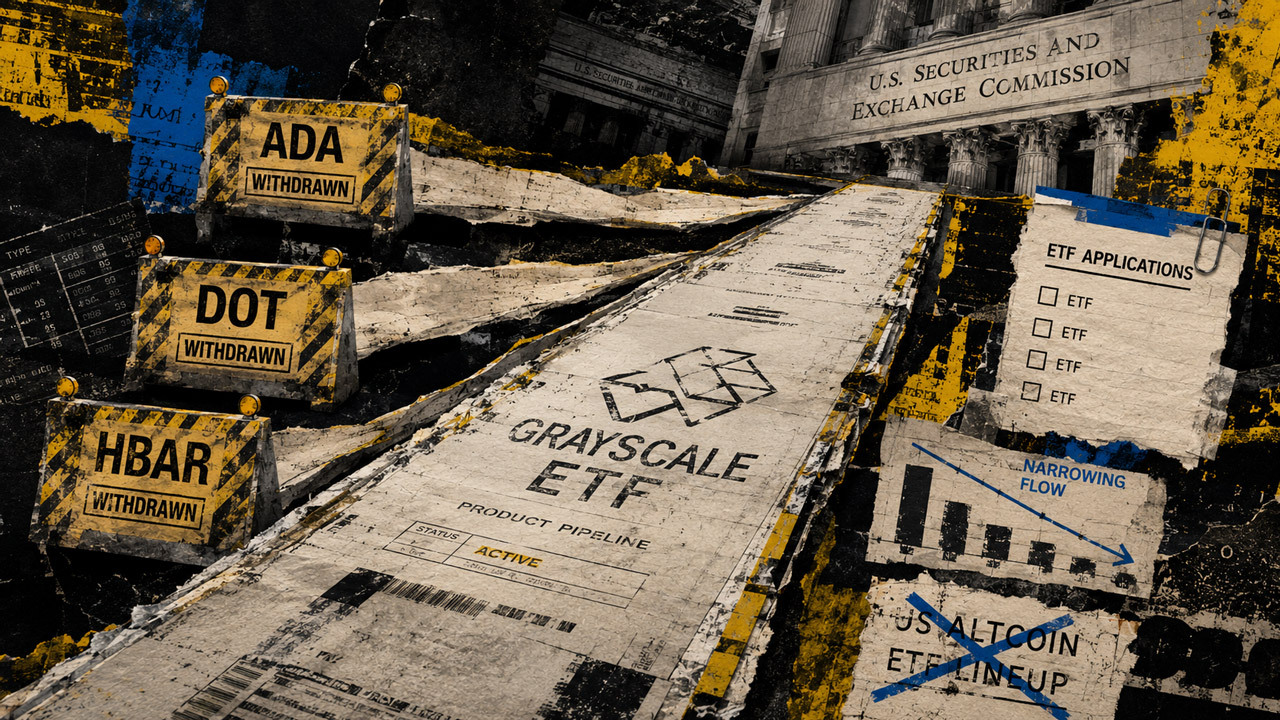
Cardano, Hedera and Polkadot registration withdrawals gave no reason for the retreat, while five other Grayscale altcoin filings remained preliminary. Editor-in-ChiefCryptoSlateAug. 10, 2026at 12:20 am GMT2 min readGrayscale withdrew Cardano, Hedera and Polkadot ETF registrations filed 190 seconds apart. The Form RWs say the registrations were not effective and no shares were issued or sold. Bittensor, Aave, BNB, NEAR and Zcash filings remained preliminary as of Aug. 8. Three Grayscale ETF registrations for planned altcoin products were withdrawn in filings accepted just 190 seconds apart on Aug. 7. The sequence began with theGrayscale Cardano Trust ETFat 4:33:37 p. m. ET, followed by theGrayscale Hedera Trust ETFat 4:34:55 p. m. and theGrayscale Polkadot Trust ETFat 4:36:47 p. m. , according to EDGAR filing records. TheCardano,HederaandPolkadotForm RWs give the same operative explanation: Grayscale does not intend to proceed with the proposed distribution of shares. The requests also state that the registration statements had not been declared effective, that no securities had been or would be issued or sold under them, and that no preliminary prospectus had been distributed. The documents are requests to withdraw the three S-1 registration statements under Rule 477, not SEC orders rejecting the proposed ETFs. They provide no separate commercial or regulatory reason for ending the registrations. The related product-specific exchange rule proposals were already inactive. SEC records show NYSE Arca withdrew theCardano proposalon Sept. 29, 2025, while Nasdaq's records list thePolkadotandHederaproposals as withdrawn on Nov. 3, 2025. Those proposals covered whether an exchange could list and trade the products, while the three Grayscale ETF registrations covered the proposed public offering of their shares. The Aug. 7 withdrawals were therefore a separate step that removes the current registration statements. The SEC had approvedgeneric exchange listing standardsfor qualifying commodity-based trust shares in September 2025. Eligible spot digital-asset products can use those standards without a product-specific Section 19(b) proposal, but the change did not make a registration statement effective or eliminate Securities Act requirements. CryptoSlate Daily BriefDaily signals, zero noise. Market-moving headlines and context delivered every morning in one tight read. 5-minute digest100k+ readersFree. No spam. Unsubscribe any time. You’re subscribed. Welcome aboard. Other Grayscale ETF registrations remain preliminaryOther proposed Grayscale altcoin registrations remain at an earlier stage. As of an Aug. 8 review of EDGAR records, registration statements for proposedBittensor,AaveandBNBexchange-traded products remained preliminary and had not become effective. Cited registration statements for proposedNEARandZcashproducts also remained preliminary. That status does not establish exchange approval or launch readiness. Two Grayscalealtcoin staking productshad reached a later registration milestone. The SEC declared the registration statements for theGrayscale Avalanche Staking ETFandGrayscale Hyperliquid Staking ETFeffective on March 11 and June 2, respectively. The effectiveness notices alone do not establish when either product began trading. The withdrawals reduce the number of Grayscale ETF registrations while leaving other filings at different stages. Because the requests state no motive beyond the decision not to proceed, they do not show whether demand, regulation or another consideration drove the withdrawals. Mentioned in this articlePosted inFollow the signalCurated intelligence, delivered your way. Never miss a market-moving update. Daily briefingTop stories & analysisMarket movesKey charts & dataPolicy updatesWhat to watchWeekly deep diveLong-form insights