Illinois Passes ‘Most Anti-Bitcoin Law in America,’ Industry Groups Push Back » Crypto Events
Illinois just signed into law what Bitcoin advocates are calling the harshest anti-Bitcoin legislation passed by any U. S. stateOn Tuesday, Illinois Governor JB Pritzker signedSenate Bill 3019into law, locking. . .
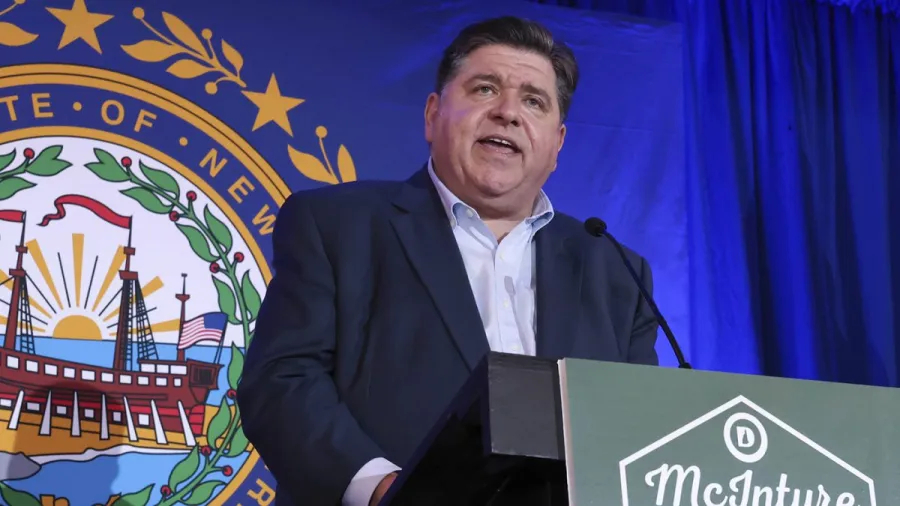
Illinois just signed into law what Bitcoin advocates are calling the harshest anti-Bitcoin legislation passed by any U. S. stateOn Tuesday, Illinois Governor JB Pritzker signedSenate Bill 3019into law, locking in a $55. 9 billion budget for the next fiscal year. Bitcoin and digital asset industry groups are particularly discontented with Article 3 of the bill, known as theDigital Asset Privilege Tax Actthat will charge a 0. 2% tax on all digital asset business activity. According to the bill, “digital asset business activity” refers to all transactions conducted on a registered broker exchange. In essence, this means the taxman will tax all transfers and storage of digital assets on exchanges and brokers on behalf of all Illinois residents. Unlike capital gains or income taxes, Illinois’ new levy does not wait for a profit. It fires on the act of transacting itself, regardless of whether the user made money. No comparable state financial transaction tax exists anywhere in the country for stocks, bonds, or derivatives. The bill takes effect January 1, 2027, and some analysts project the trend may spill over to neighboring states. Tax firmBDO USA notesthat out-of-state platforms doing sufficient business with Illinois residents could be subject to the same rules. Industry PushbackOn June 16th, theCrypto Council for Innovationreached out with a letterto Governor Pritzker before he signed the bill, urging him to scrap Article 3 entirely. The council argued that Article 3 could be violating federal laws, as it categorically targets blockchain technology as a medium for asset transfer, effectively favoring traditional finance users over Bitcoin holders. In the letter, the Crypto Council for Innovation compared the blanket bill to taxing correspondence because it is delivered by email rather than by post. “Illinois would be creating a novel tax regime that uniquely and disproportionately burdens residents for simply using digital assets,” reads the letter. “We fear this proposal would seriously impair digital asset use and investment, as well as the state’s ability to attract new entrepreneurs and maintain its burgeoning startup community. ”Prior to the governor signing the bill into law, theBlockchain Associationand theDigital Chamberalso sent ajoint letterdescribing the proposal economically destructive, procedurally deficient, and legally unsound. The two groups argued that the Senate rushed this proposal into the budget with no public participation, and stated plainly that no other state has enacted such a punitive tax law on digital asset activity. Miles Jennings, Head of Policy and General Counsel at a16z Crypto,slammed the bill, stating that “rather than embracing innovation and the cost efficiencies blockchains can deliver for ordinary people in Illinois, the state is poised to punish its entrepreneurs and citizens that want to use crypto. ”This is one of the most anti-crypto laws in the U. S. It taxes the exchange, transfer, or storage of digital assets—you buy BTC, you pay a tax; you hold your BTC on Coinbase, you pay a tax; and so on. There is effectively no comparable state financial transaction tax on stocks,…https://t. co/vreRHHAAl4— miles jennings (@milesjennings)June 17, 2026The Crypto Council for Innovation made the same point in its letter to Pritzker, arguing that an investor who holds a stock, bond, or derivative on paper faces no equivalent levy, while the same instrument triggers a tax the moment it moves on a blockchain. Compliance Burden and Criminal PenaltiesThe law places collection duties on digital asset brokers such as exchanges, custodians, wallet providers, and firms that transmit assets between accounts. Out-of-state brokers are pulled in once their annual receipts from Illinois customers reach $100,000. Brokers must register with the Illinois Department of Revenue before January 1, 2027, file monthly reports, and list the tax as a separate line item on customer bills. Failure to register is no administrative slip—unregistered brokers face Class 3 felony charges, carrying prison sentences of two to five years and fines up to $25,000. Chicago’s Bitcoin Ecosystem at RiskIllinois is home to prominent Bitcoin and trading firms, including Bitnomial — operator of the first U. S. leveraged retail spot Bitcoin exchange — and Jump Crypto. Industry groups fear firms will relocate to more hospitable states, draining the Prairie State of the investment and talent the sector has concentrated in Chicago, its largest city. The Crypto Council for Innovation argued the law arrived at the worst possible moment, as digital asset businesses are already navigating disruptions stemming from implementation of Illinois’ ownDigital Assets and Consumer Protection Act. The Bitcoin tax is not the only provision in SB 3019 inviting acourtroom challenge. There was also uproar over accompanying social media and digital advertising taxes in the same bill, citing federal preemption and First Amendment concerns. The Midwest Fights BackThe backlash is already reaching beyond the courtroom. Midwest Bitcoin Summit, taking place September 23–24 in Columbus, OH, has made holding politicians accountable a centerpiece of this year’s event:Taxing Freedom Itself: Illinois’ Tyrannical War on Bitcoin & Why Every Bitcoiner Must Fight Back NowThey came for your sats. Now the Midwest fights back. This September we hold states and politicians accountable on stage. Taxing Freedom Itself: Illinois’ Tyrannical War on Bitcoin & Why Every Bitcoiner Must Fight Back NowThey came for your sats. Now the Midwest fights back. This September we hold states and politicians accountable on stage. Midwest Bitcoin SummitSept 23-24 | Columbus, OH…https://t. co/KUpaXOsN2mpic. twitter. com/tFQ4LEbLcF— Midwest Bitcoin Summit (@MWBTCSummit)June 17, 2026Tickets fr MBS 2026 areavailable with a 21% discountfor the Bitcoin community. What Comes NextIllinois’ Digital Asset Privilege Tax now stands as a test case, both legally and politically. If industry challenges fail to block or amend the law before January 2027, every Bitcoin holder, exchange, and custodian serving Illinois residents will face a compliance decision: absorb the cost, pass it to customers, or leave the state entirely. The broader stakes are higher still. Should Illinois’ approach survive legal scrutiny and generate revenue without triggering mass exodus, other deficit-strained states will be watching closely. For Bitcoiners, the message is clear: what happens in Springfield doesn’t stay in Springfield.