Bitcoin's Lottery Jackpot: Solo Home Miner Wins $200,000 With a $150 Mining Device
A hobbyist running a single Bitaxe device just won Bitcoin’s biggest lottery. Key TakeawaysA solo home miner claimed the full 3. 1382 BTC reward from block #957382 via Public Pool on July 9, 2026. Bitaxe ran at. . .
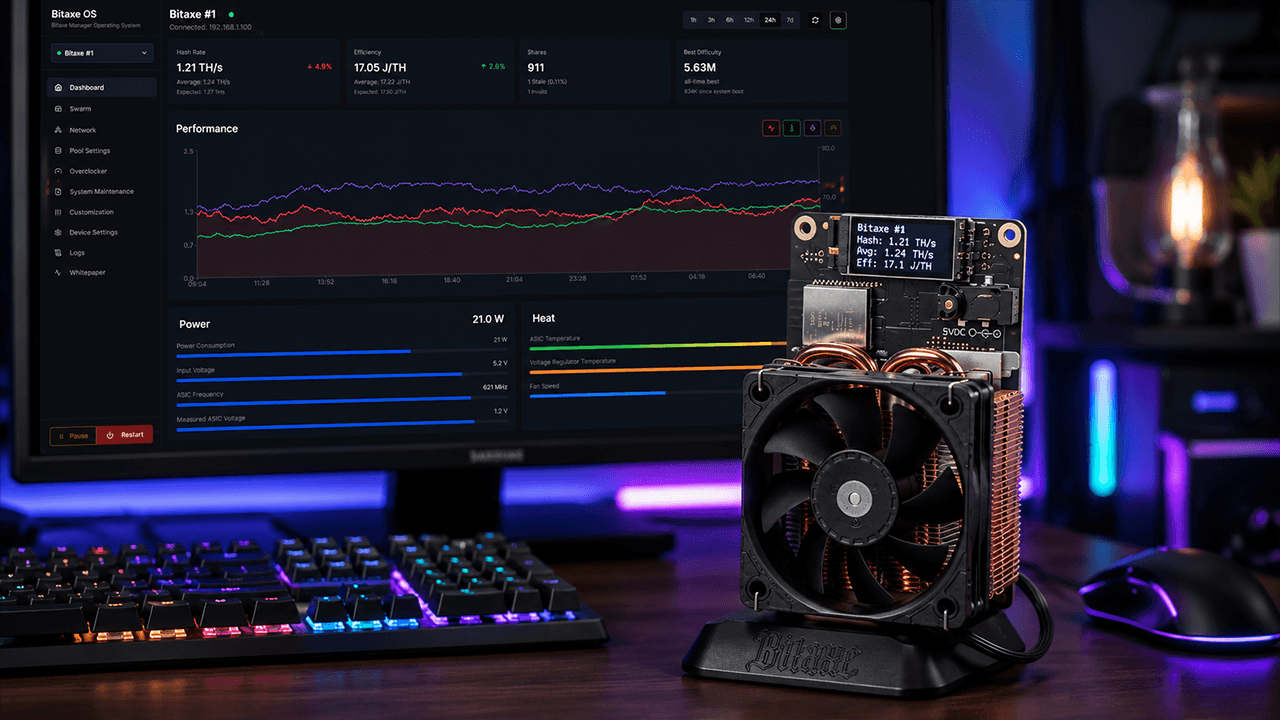
A hobbyist running a single Bitaxe device just won Bitcoin’s biggest lottery. Key TakeawaysA solo home miner claimed the full 3. 1382 BTC reward from block #957382 via Public Pool on July 9, 2026. Bitaxe ran at 995. 2 GH/s for eight hours before beating roughly 900 EH/s of network hashrate. Win adds to solo block wins tracked by Soloblocks. io and D-Central. tech since block 853,742 in 2024. On July 9, 2026, at approximately 03:30 UTC, a solo miner using a palm-sized Bitaxe device mined block957382through Public Pool, claiming the full 3. 1382BTCblock reward. That includes the 3. 125BTCsubsidy plus roughly 0. 0132BTCin transaction fees, worth roughly $200,000 at the time. The device ran at an average of 995. 2 GH/s, close to its rated 1 TH/s, for about eight hours before submitting the winning share. That share carried a difficulty of 294. 14 trillion, more than double the network target, which is what confirmed the block solve. Because the miner was the only worker on the address, the entire reward went to one person, with no pool fee taken. The Odds Behind the WinBitcoin’s networkhashratesat at roughly 874 exahash per second (EH/s) at the time, with difficulty near 133. 9 trillion. A miner running 1 terahash per second (TH/s) controls about one-eighty-seventh-millionth of the network’s totalhashrate. Visual perspective on the odds and timeline of winning aBTCblock with a 1TH/s machine. Analysts estimate a device with thathashratewould need roughly 16,000 to 18,300 years on average to find a block. This miner found one in a single overnight eight-hour session. That is the nature ofbitcoin mining. Every hash has an equal shot at solving the current block, regardless of who owns it or how muchhashratethey control. Someone wins every block. Most solo miners run for years without a payout. A small number hit the jackpot on their first attempt. What a Bitaxe Actually IsThe Bitaxe is an open-source, single-chipbitcoin minerbuilt around Bitmain’s BM1370 chip, the same silicon family used in some industrial Antminer S21 units. A Gamma-series Bitaxe ships with roughly 1. 0 to 1. 3 TH/s of stockhashrate, draws 15 to 21 watts, and typically sells for $60 to $150. It connects over Wi-Fi, runs community-built AxeOS firmware, and displays live stats on a small screen. Hobbyists built the platform a few years ago as an educational tool rather than a profit machine. Its share of globalhashrateis too small to guarantee steady payouts through a shared pool, which is exactly why solo mining exists. How the Public Pool Made the Win PossibleIn pooled mining, rewards are split among everyone contributinghashrate. Solo mining works differently. If a miner’s device finds the winning share, that miner keeps the entire block reward. Image ofBitcoinblock 957382 via mempool. space. Public Pool supports both modes and charges 0% fees on solo configurations, which has made it a common choice for Bitaxe owners. Miners connect through a Stratum address, use their ownbitcoin addressas the username, and watch the dashboard trackhashrateand best difficulty share in real time. This marks the second Public Pool solo win attributed to a single Bitaxe that the community has tracked in quite some time. Solo CKPool remains another majorsolo pool option, charging a small fee in exchange for a longer operating history. There’s also Braiins Solo, Parasite Pool, and Futurebit Solo among the list of solo pools available, each with different features and rules. Roughly 42 days ago,Bitcoin. comNewsreportedon a $300 machine, a Canaan Avalon Nano 3S with 6. 68 TH/s of hashpower, discovering block height 951771. At the time, our newsdesk calculated that a Canaan Avalon Nano 3S, operating at just under 7 TH/s, has roughly a 6. 72-in-a-billion chance of discovering any givenBitcoinblock, or about one in 148,904,370. Community ResponseThe win spread quickly on X under tags including #Bitaxe and #SoloMining. One widely shared post read, “Never let anyone convince you that you can’t mine a block!!!”Image source: XSeveral sites that track solo block wins logged the event alongside prior Bitaxe victories. What This Means for Home MinersThe expected value of solo mining at this scale remains tiny, often pennies a day inBTCterms. Consistent income still comes from pooled mining. What events like this show is that the door stays open. A device costing less than a mid-range smartphone, running on standard household power, can still claim the same reward as a warehouse full of industrial rigs. In that respect, solo mining closely resembles a lottery: the odds of winning are extraordinarily long, but someone eventually beats them. For the operator behind block 957,382, a $150 piece of hardware and a $1 to $2 monthly electricity bill turned into a life-changing payout in under a day.