Bitcoin holders rush coins to safety after Coldcard hack
Listen: the breakdownDeveloping story:This story is still unfolding. We are tracking it and will update this article as more details are confirmed. Market briefing:A Coldcard hack has owners rushing Bitcoin to. . .
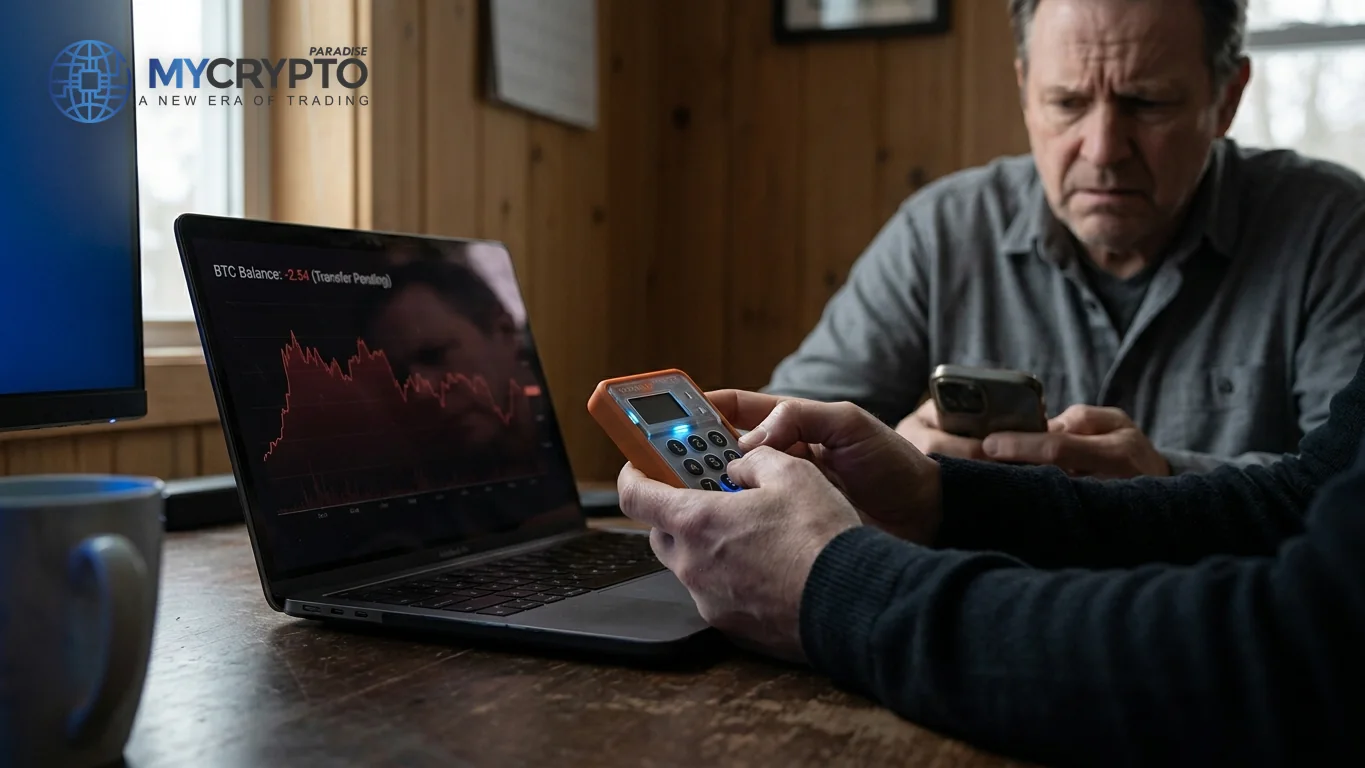
Listen: the breakdownDeveloping story:This story is still unfolding. We are tracking it and will update this article as more details are confirmed. Market briefing:A Coldcard hack has owners rushing Bitcoin to fresh wallets, yet BTC holds firm near $63,462. Fear is moving coins, not price. A Coldcard flaw let attackers rebuild seeds and steal about $70M in Bitcoin. On-chain sending activity is spiking as nervous long-term holders move funds out of caution. BTC still holds above our $62,500 invalidation, so the market is absorbing the shock. The Coldcard hack did not just cost $70M. It sent owners scrambling to move coins to safety, spiking on-chain activity. So who is really selling into this fear?Bitcoin owners moved coins in a hurry this week. The reason was fear, not greed. A flaw in the Coldcard hardware wallet let attackers rebuild recovery phrases and drain funds. Around $70 million in Bitcoin vanished on July 30. Roughly 1,200 addresses were hit. The theft was fast and clinical. The core burst lasted about 25 minutes. The attacker chased the biggest balances first. More than $30 million left wallets in the first ten minutes alone. Nobody had to touch the physical devices. That last detail is the frightening one. The seed itself was guessable. Many victims were long-term holders whose coins had not moved in years. Now a wider group of nervous owners appears to be shifting funds to fresh wallets out of caution. On-chain sending activity has climbed sharply, while receiving activity has lagged well behind. That imbalance reads like a defensive shuffle between an owner's own wallets, not fresh buyers arriving. We covered the self-custody fear earlier today. This is the next chapter: the actual coin movement that fear triggered. A patch now exists, so the door is closed. But a blunt warning still stands. Further waves of theft are likely if exposed owners sit still. In crypto, the follow-through panic often does more damage than the original exploit. Live BTC/USDT chartinteractiveWhy a seed flaw shakes self-custody trustThe Coldcard hack strikes at the one promise self-custody makes. Hold your own keys, and no one can touch your coins. This flaw broke that promise without touching a single device. That changes behavior, and behavior moves markets. When trust in a storage method cracks, owners react in two ways. Some rush coins to a different wallet. Others move them to an exchange while they think. Both responses lift on-chain activity, and both can look like selling pressure even when no selling happens. The macro effect is subtle but real. Fear raises the perceived cost of holding Bitcoin yourself. For a slice of holders, that nudges coins toward custodians and exchange accounts. More coins on exchanges usually means more available supply to sell. That is the transmission line to watch. A security scare does not print a red candle by itself. It works through liquidity, by shifting where coins sit and how fast they can be dumped. Here is the honest read. The confirmed fact is the theft and the patched flaw. The scale of the wallet migration is still developing and not yet fully corroborated. So we treat the address spike as a strong signal of caution, not proof of a mass exit. The distinction matters, because panic narratives are cheap and verified outflows are not. A Coinkite Coldcard hardware cryptocurrency wallet, the device type at the center of the reported hack. Photo:Gareth Halfacree from Bradford, UK, CC BY-SA 2. 0, via Wikimedia CommonsHow the security shock ripples through liquidityStart with the reaction that did not happen. BTC traded near $63,462, up roughly 0. 6% on the day, as the story spread. A $70 million theft barely moved the tape. That calm is the tell. When frightening news lands and price holds, someone is absorbing the fear. Coins moving between wallets create noise, but noise is not supply hitting bids. Real damage needs coins reaching exchanges and then getting sold. Bitcoin sets the tone here, as it always does in a risk event. Holding firm above support tells the rest of the market the shock is contained. ETH tends to follow that lead with a short lag. If BTC absorbs the news, ETH usually mirrors the steadiness rather than leading a breakdown. Alts sit at the far end of the chain, and they feel every wobble more. A genuine confidence break would show first as thin alt liquidity and sharper alt drawdowns. So far that cascade has not fired. The smart-money reading is straightforward. Bearish headline, fearful retail, price pinned at support. That is often the exact backdrop where patient buyers add, while frightened owners hand over coins near the lows. The market is treating the Coldcard hack as a shakeout to absorb, not a trend to chase lower. That can change fast if exchange balances start climbing in size. Signals that confirm calm or break itThe next few sessions settle the argument between fear and structure. Watch on-chain flow first. If sending activity keeps rising but exchange balances stay flat, owners are reshuffling into safer wallets, not selling. That is bullish absorption dressed up as panic. The warning sign is different. A steady climb in coins landing on exchanges would flip the read. That points to real supply arriving, and it demands respect. One is a defensive move. The other is distribution. Price gives the cleaner confirmation. As long as BTC holds above $62,500, our invalidation, the shock stays contained and the broader path stays intact. A clean daily close below $62,500 is the line that changes the story. Below there, the reaccumulation zone near $61,000 becomes the real test. Buyers defending that band would confirm the shakeout thesis. A decisive loss of it would say fear is winning and force a rethink. Volume matters as much as level. A calm hold on thinning volume is constructive. A break on heavy volume is a genuine warning, not noise. Stay alert to the second wave too. The risk is not only the original theft. It is copycat attempts on exposed seeds if owners delay moving funds. A fresh cluster of thefts could reignite the fear the market just shrugged off. What the coin movement signals for positioningThe ParadiseTeam reads this as a fear event landing into an accumulation structure, not the start of a breakdown. Our bias stays cautiously bullish while BTC holds above $62,500. The Coldcard hack tests that thesis; it does not yet break it. Here is how the news maps to our levels. Price near $63,462 sits just above the $62,500 invalidation and above the $61,000 reaccumulation zone we have flagged. The hack pushes retail fear at the exact spot where patient buyers prefer to add. That is the smart-money-versus-retail mechanic in plain sight. Stops are the key here. Frightened holders park sell-stops just under support, right around $62,500 and the $61,000 shelf. Those resting orders are liquidity. A shock like this exists to shake them loose before the intended move, whichever way it runs. The path we watch is a hold and continuation toward the $79,000 target, with $61,000 defended on any dip. Risk-to-reward (R:R) favors patience over chasing. A defined stop-loss (SL) below $62,500 keeps the idea honest if we are wrong. Invalidation is not a feeling; it is a level. A clean daily close under $62,500 tells us the fear is converting into real supply. Until then, we treat the coin movement as caution, not capitulation. The $44,000 macro floor stays our deeper line for a fuller retail flush. Related coverageBitcoin etf inflows hit 132m but smart money waitsSign launches forward claim to trade locked sign earlyFor exact entries, targets, and stop losses with full risk management, that is whatParadiseFamilyVIPis for. New to reading these moves? Start with ourcrypto trading strategiesguide. ParadiseTeam is monitoring the market situation closely, and we are taking these developments into consideration while building our trading tactics inside ParadiseFamilyVIP. Crypto trading involves substantial risk. Prices are volatile and you can lose money. This article is educational and is not financial advice. Past performance does not guarantee future results. Paradisers' PollMembersIs the Coldcard fear a smart-money buy zone or the start of a deeper drop?Make your call to unlock what Paradisers are calling. One vote, locked in. Buy zone, holds $62. 5K0%Deeper drop coming0%Chops sideways first0%Too early to call0%0Paradisers have made their callMyCryptoParadise DiscussionJoin the discussionSign in to joinOpen for everyone to read. The conversation is for Pro Paradiser members.